

Responsible sourcing
Various definitions exist for “Responsible Sourcing” (RS). According to the International Chamber of Commerce (ICC) RS is ‘a voluntary commitment by companies to take into account social and environmental considerations when managing their relationships with suppliers’.
The ISO 20400 (2017) Guidance on Sustainable Procurement defines RS as ‘procurement that has the most positive environmental, social and economic impacts possible over the entire life cycle (consecutive and interlinked stages of a goods or services system), from raw material acquisitions or generation from natural resources to final disposal`.
In EU, from the 1st of January 2021 came into full force the new, so called, “Conflict Minerals Regulation”( Regulation (EU) 2017/821).
With the objectives to stop: “conflict minerals and metals from being exported to the EU, global and EU smelters and refiners from using conflict minerals, and mine workers from being abused;”[ https://policy.trade.ec.europa.eu/development-and-sustainability/conflict-minerals-regulation_en], it requires EU companies to ensure they import tin, tungsten, tantalum(3Ts) and gold from responsible sources only.
Specifically, the regulation requires importers to follow a five-step framework, which the Organisation for Economic Co-operation and Development (OECD) has laid out in a document called 'Due Diligence Guidance for Responsible Supply Chains from Conflict-Affected and High-Risk Areas' (hereafter OECD Due Diligence Guidance).
The OECD Due Diligence Guidance is a government-backed multi-stakeholder set of recommendations on responsible supply chain management that has become the underlying standard of a significant number of mineral certification schemes and audits, as well as of a number of companies’ corporate policies regarding mineral sourcing from Conflict-Affected and High Risk Areas (CAHRAs).
The OECD Guidance provides a set of minimum standards and guidelines for companies to ensure that they do not finance conflict or human rights abuses through their mineral sourcing. It is a flexible five-step framework that can be adapted to the needs of any company. The OECD Guidance focuses on issues of human rights, provision of security, forced and child labour, legality of operations and payment of taxes.
Conflict minerals came into public attention in the 1990s and 2000s, when some NGOs denounced that the growing demand for mobiles and other electronic products, as well as jewellery, was fuelling violence and atrocities in several African countries.
In 1998, Global Witness published an alarming report on the role of diamonds in the Angolan conflict (Global Witness, 1998). The attention grown until reaching the UN General Assembly where the issue of “conflict diamonds” was more specifically discussed, leading to the formulation of its definition[1] and establishment of sanctions in 2000. In 2003, outrageous situations were described in Sierra Leone by the NFNF-governmental organisation Partnership Africa Canada (PAC). In general, this media coverage proved that the illicit trade of diamonds funded brutal wars also in numerous African countries, including also the Central African Republic, Democratic Republic of Congo and Liberia, resulting in the death and displacement of millions of people.
Similar situations have been later described in reports published by other NGOs on, among others, gold, and the mineral ores that produce the metals tantalum, tin and tungsten (often referred as 3TG). Evidence from the Enough Project, published in 2009, showed that besides copper and diamond, the 3TG are reported to be traded by armed groups in the DRC. Also in a report of the EU project POLINARES published 4 years later, it was pointed that profits from the illegal extraction and trade of coltan financed the activities of armed groups still in the DRC, protracting thereby the wars. Coltan was yet reported to be of minor importance during the conflict, unlike cassiterite and gold.
Armed groups use different methods for profiting from minerals, often controlling the mines and forcing miners to work in desperate and dangerous conditions, or exacting bribes and taxes from transporters, local and international buyers, and at border controls. In fact, methods for profiting from minerals used by armed groups cover all steps of the value chain, from mine extraction to export. Due to its characteristics, and having often an informal and illegal nature, artisanal miners are particularly prone to be exploited for this purpose.
Conflict minerals and diamonds are indispensable for a number of industrial and high-tech applications including green technologies and sustainable energy. The international trade dimension of these raw materials is therefore of strategic importance. Tantalum and tungsten are also considered critical for the EU economy, due to their relatively high economic importance and supply risk.
[1] “Rough diamonds which are used by rebel movements to finance their military activities, including attempts to undermine or overthrow legitimate governments” United Nations, general Assembly Resolution 55/56, December 2000.
The batteries sector is strategic for the EU. The recently adopted strategic action plan on batteries (COM(2018)293 final) includes a comprehensive set of concrete measures to develop an innovative, sustainable and competitive battery ‘ecosystem’ in Europe. Indeed, batteries are used in e-mobility, renewables and electricity provision in off-grid communities, etc. and are expected to enable the transition towards a low-carbon economy.
Trends in demand, supply and materials flows of batteries are shown in a dedicated data viewer in the RMIS.
Extraction of raw materials and their use in batteries and other technologies can sustain economic development and human well-being, contributing to several SDGs. Raw material extraction and production, especially in developing and weak governance countries, can also generate severe environmental and social impacts, or even be linked to conflicts, especially in high-risk areas.
In the case of cobalt, a material used as cathode in rechargeable batteries, Democratic Republic of the Congo (DRC) alone provides around 60% of the global supply of cobalt (WMD 2020), and 20 to 25% of the country production comes from the Artisanal and Small-scale Mining (ASM) sector (Mancini et al. 2020).
NGOs and media repeatedly reported cases of severe human rights abuses and child labour in the DRC, where some of the sector issues being linked to ASM sector (e.g. in relation to abysmal occupational health and safety), while other problems (e.g. corruption or use of armed forces) are more related to Large Scale Mining (LSM) (e.g. OECD 2019).
Given the role of batteries for achieving carbon reduction objectives and the forecasted growing demand of batteries in the EU, ensuring that materials are sourced responsibly is a crucial policy objective.
Some initiatives for ensuring that cobalt is sourced in a responsible way have been launched in the last months/years. However, little is known about their capability of improving social conditions on the ground.
The JRC has carried out in 2019-2020 a study on responsible souring of batteries raw materials. The scope and objectives of the study are illustrated in figure 2 below. Starting from a top-down approach, in which country-based data combined with data on materials supply, the report then scrutinizes company sustainability reports and reviews the existing responsible sourcing initiatives for cobalt.
The last part of the report focuses on two initiatives implemented on the artisanal mining sector in the DRC and, using primary data collected on site, investigates their social impacts on the ground.

A hotspot analysis was applied to the supply of primary raw materials used in batteries, combining data on the supply of battery materials with indicators considered relevant to the responsible sourcing of batteries.
The materials under consideration are cobalt, lithium, nickel, manganese and natural graphite.
The objective of the analysis was to detect potential criticalities in the materials value chain, thus using country-based data to identify which material supplying countries can be at risk in relation to the selected aspects. (The full methodology of the analysis is described in the report, chapter 2).
The indicators selected to represent the materials supply are the following:
- Sum of reserves and resources reported by materials and countries, assessed in 2019 by the Standard & Poor Global Market Intelligence Database.
- World material production at mining stage, based on average 2012-2016 from World Mining Data
- EU material sourcing, which represents the sum of import and raw material production at mining stage of EU countries.
The combination of these indicators allowed highlighting the main players in the production of materials for batteries, as displayed in the figure 3 below.

The material supply data have been combined with a set of country-based indicators selected for their relevance for responsible and sustainable sourcing. These indicators are grouped into 4 thematic areas: governance, conflicts, human and social rights and environment, and are shown in the figure below.

For each social and environmental indicator, risk levels have been assigned using reference scales from 1 (lower risk) to 4 (highest risk). Results are shown in figures 5 and 6 below and confirm that DRC is, by far, the country at highest risk, especially concerning conflict, child labour, forced labour and governance. The Philippines, which supply nickel and natural graphite, also have a high average risk score.
A second cluster of countries was identified as being at relatively lower risk than the first group, but having important roles as EU suppliers. Indeed, they provide various materials to the EU (and other materials relevant to other low-carbon technologies, e.g. rare earths and platinum group metals). The common aspects of these countries are the high risk in the WGI indicators average and in the indicators on conflicts. In the case of South Africa, environmental performance and water stress also appear critical, while for Brazil conflicts with the indigenous communities are an issue of concern.
The third group of countries could have a role in future materials supply, as they own high proportions of global reserves and resources of materials used in batteries. For instance, with 68 % of global reserves and resources, Mozambique could compete with China as a graphite supplier in the near future. Bolivia could also become a key player in lithium supply, as could Gabon for manganese. These three countries show high risk levels for child labour.

(*) Risk levels provided by PSILCA database. Numbers in italics in the child labour category mean that original estimates are older than 2010 (China 2009, Mozambique 2007).

Sustainability data disclosure is an important tool for ensuring transparency and promoting responsible business conduct. As described in the Raw Materials Scoreboard 2018, the number of companies publishing sustainability reports has increased in the last decade. This indicator is also used to monitor progress towards the UN Sustainable Development Goals (SDGs).
The disclosure of information on aspects of sustainability is already a legal obligation for large companies with more than 500 employees, as required by Directive 2014/95/EU (actually under review). Companies are asked to use existing widely accepted reporting frameworks or to follow the Guidelines on NFNF-financial reporting of the European Commission.
After the identification of the main players in the global battery material supply chain for the materials the website and sustainability reports of mining company producing materials for batteries have been screened. The analysis concerned the nature of the information provided, if goals and targets are established and assessed through quantitative indicators, and if changes from the past years are monitored.
Table 1 below shows the results of the analysis and points out what elements are included in the corporate sustainability reports of the selected companies.
| Material | Cobalt | Graphite | Lithium | Manganese | Nickel | Niobium | ||||||||
| Company | Glencore | China Carbon Graphite Group | Graphite India Ltd | South Star Mining Corp | Talison Lithium Inc. | SQM | Albemarle Coorporation | Orocobre | South32 | VALE | VALE Indonesia | BHP Billiton | CBMM | Niobec |
| Sustainability policy | n.a. | n.a. | n.a. | n.a. | Ö | Ö | Ö | Ö | Ö | Ö | Ö | Ö | Ö | Ö |
| Sustainability report | Ö | n.a. | n.a. | n.a. | n.a. | Ö | Ö | Ö | n.a. | Ö | Ö | Ö | Ö | n.a. |
| Indipendent audit | On selected aspects only | n.a. | n.a. | n.a. | n.a. | n.a. | n.a. | n.a. | n.a. | Ö | n.a. | Ö | Ö | n.a. |
| Consideration of SDGs | n.a. | n.a. | n.a. | n.a. | n.a. | n.a. | n.a. | n.a. | Ö | Ö | Ö | Ö | n.a. | n.a. |
| Sustainability goals | Ö | n.a. | n.a. | n.a. | n.a. | Ö | Ö | Ö | n.a. | Ö | Ö | Ö | Ö | Ö |
| Quantitative sustainability targets | Ö | n.a. | n.a. | n.a. | n.a. | Ö | n.a. | n.a. | n.a. | n.a. | n.a. | n.a. | n.a. | n.a. |
| Data on Health and Safety* | Ö | n.a. | Ö | n.a. | n.a. | Ö | Ö | Ö | n.a. | Ö | Ö | Ö | Ö | n.a. |
| Data on wages* | n.a. | n.a. | n.a. | n.a. | n.a. | n.a. | Ö | Ö | n.a. | n.a. | n.a. | n.a. | n.a. | n.a. |
| Data on gender balance* | n.a. | n.a. | n.a. | n.a. | n.a. | Ö | Ö | Ö | n.a. | Ö | Ö | Ö | Ö | n.a. |
| Data on benefits for workers* | n.a. | n.a. | n.a. | n.a. | n.a. | Ö | Ö | Ö | n.a. | n.a. | Ö | n.a. | Ö | n.a. |
| Data on type of contracts (time limited, open ended)* | n.a. | n.a. | n.a. | n.a. | n.a. | n.a. | Ö | Ö | n.a. | Ö | n.a. | Ö | Ö | n.a. |
| Data on impacts on local community* | n.a. | n.a. | n.a. | n.a. | n.a. | n.a. | n.a. | n.a. | n.a. | Ö | Ö | Ö | Ö | n.a. |
| Data on activities on local communities* | Ö | n.a. | n.a. | n.a. | n.a. | n.a. | Ö | Ö | Ö | Ö | Ö | Ö | Ö | n.a. |
| Data on taxes, royalties, contribution to national revenue | Ö | n.a. | n.a. | n.a. | n.a. | Ö | n.a. | Ö | Ö | Ö | Ö | Ö | n.a. | n.a. |
| * Categories included in the EU Guidelines for NFNF-financial reporting | ||||||||||||||
Given the strategic importance of cobalt for achieving the decarbonisation of the economy, several responsible sourcing initiatives and strategies have been announced regarding this material. The promoters of these initiatives are companies in the cobalt value chain, industry organisations (e.g. industry associations or chambers of commerce), NGOs, private actors in the field of responsible sourcing and certification of raw materials, and also government programmes.
A NFNF-exhaustive list of initiative includes:
- Cobalt Industry Responsible Assessment Framework (CIRAF) proposed by the Cobalt Institute
- Sustainable procurement framework for Cobalt of the global materials technology and recycling group Umicore
- Responsible Cobalt Initiative of the China Chamber of Commerce of Metals, Minerals & Chemicals Importers and Exporters
- The Responsible Minerals Initiative, which has developed cobalt specific tools like the Cobalt Reporting Template (CRT) and the Pilot Cobalt Refiner Due Diligence Standard.
- Clean Cobalt Framework of the Eurasian Resources Group (ERG)
- Better Mining, launched by the global consulting company RCS Global
- Mutoshi Pilot Project, a partnership between the Trafigura Group (a commodities trading and logistics company), Chemaf (a mining company), Comiakol (an ASM cooperative) and Pact (an international NGO).
- Cobalt for Development developed by industries (BMW Group, BASF SE, Samsung SDI and Samsung Electronics) and the German federal agency for cooperation and development (GIZ GmbH).
Figure 7 illustrates the step of the supply chain upon which these initiatives operate. Three initiatives engage with the artisanal mining sectors.

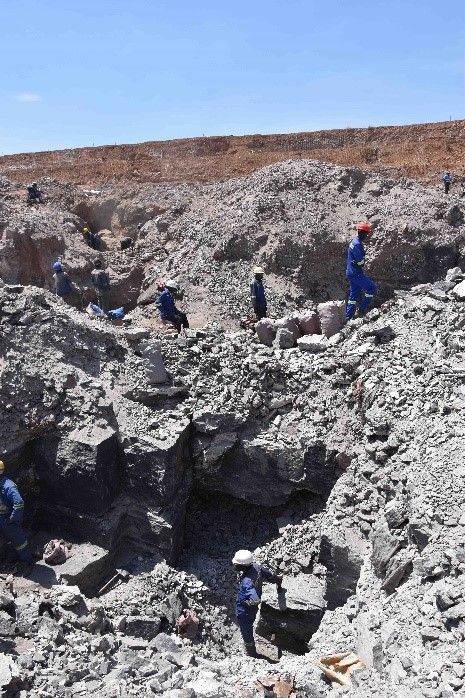
The study “Responsible and sustainable sourcing of batteries raw materials” assesses the impacts of two initiatives aimed at improving the conditions of artisanal mining of cobalt, through a field investigation and primary data collection. The initiatives selected, Better Mining and Mutoshi Pilot Project, were implemented for at least one year when the research started.
The two initiatives are compared with the general conditions of the cobalt and copper ASM sector in Lualaba and Haut-Katanga provinces in the DRC (see map in figure 8).

The main steps of the methodology are illustrated in figure 9. The characterisation of pilot sites is based on the collection of qualitative information through information matrices. These are based on the OECD Guidance and other relevant standards for responsible and sustainable supply. They also include the guidelines for Social Life Cycle Assessment (S-LCA), a methodology aimed at assessing socio-economic impacts of products and organization along their life cycle. The role of S-LCA in assessing social impacts of the initiatives is discussed in this video.
Video presented during the Social LCA Conference 2020.
The collection of qualitative information included consultation of secondary sources, phone and in-person interviews with a diverse range of stakeholders, and direct observation in and around mine-sites. This information gathering was complemented by a visit to a third ASM site, where no pilot was implemented. It was chosen as representative of the general ASM sector, and used as a baseline.

Results show that the systems analysed are rather effective at implementing the changes that they are designed to implement. This is especially visible when it comes to issues of life-threatening working conditions, child labour and corruption. However, risk categories addressed by these projects are dictated by downstream expectations and do not necessarily correspond to the demands of the miners they are designed to protect. For instance, price calculation and income are particularly salient aspects and are not captured by the evaluations. The S-LCA methodology offers a promising avenue to expand the scope of enquiry in a structured manner.
Overall, the positive results of the systems analysed warrants an appeal to further facilitate the development of similar initiatives and to avoid exclusion of ASM from supply chains.
More information on the study can be found in the report.

(Photo credit: Nicolas Eslava, Afai Consulting BV)
(Photo credit: Nicolas Eslava, Afai Consulting BV)
RE-SOURCING - an EU-funded Multi-Stakeholder Platform - aims to advance Responsible Sourcing of raw materials along and across global mineral value chains on both, the industry and policy level. It strives to promote both strategic agenda setting and coherent application of practices for Responsible Sourcing in order to foster a level playing field for responsibly sourced materials and businesses practicing due diligence.
The H2020 project RE-SOURCING focuses on 3 main sectors:
- Renewable Energy
- Electrical and electronic equipment (EEE)
- Mobility
More information can be found the projects’ website: https://re-sourcing.eu/
Stopping the Climate Crisis by achieving a 1.5°C GHG emission reduction scenario will require a huge increase in the provision of renewable energy. For example, IRENA predicted that onshore wind energy capacity will have to increase by 900%, offshore wind energy by 4000% and solar energy capacity will increase 18 times. This naturally will lead to a substantial increase in demand for raw materials, in particular copper, rare earth elements (REE) and silicon metal.
Copper
Copper is used for wind turbine manufacturing. Copper is not considered a critical raw material by the EU, since a large amount of copper is extracted in the European Union (4% of global extraction.
Yet, to meet demands, EU companies still need to import copper from outside the EU, mainly Chile, Peru and China. Challenges in the extraction of copper include the conflict between Large Scale Mining (LSM) operations and Artisanal Small-scale Mining (ASM), which provide a source of employment for many people. The obtainment of mining licenses has been associated with corruption. Environmental impacts of copper mining include water pollution and tailings dam failures. The resulting pollution is suspected to severly impact human health (e.g. cancer). In addition, the mining of copper is highly energy- and CO2-intensive.
Rare Earth Elements
REE are essential for wind turbine manufacturing. The permanent magnet generators used in many wind turbines require neodymium, iron, and boron Nd-Fe-B. The supply of REE is highly concentrated with China supplying 98% of the EU’s supply.
The impacts that can be associated with the mining of REE include the leaching of chemicals, heavy metals and radioactive elements. In addition, the further processing of REE is very energy-intensive – depending on the energy source used, this may lead to high carbon-emissions.


Silicon metal
Silicon metal is essential for solar PV manufacturing. High purity quartz is the main source of silicon metals. China accounted for 64% of global supply in 2019. It is considered a Critical Raw Material by the EU, as the EU only accounts for 6% of global supply but 18% of global consumption.
There are no reports about human rights abuses or environmental pollution at the mine sites for high purity quartz. However, the further processing is very energy- and carbon intensive, as the necessary heat is often created by using coal. In addition, one-third of the polysilicon used by the global PV industry is produced in the Xinjiang region of China, which has been connected to human rights abuses and forced labour of the Uighur and other Muslim minorities.
To read more about the production challenges of selected industries in the renewable energy sector, please refer to the State of Play report by the RE-SOURCING Project.
Manufacturing
With regards to Solar energy, China dominates production of solar PV cells, with only two of the ten largest manufacturers globally not being Chinese. Challenges associated with solar panel manufacturing include high energy consumption in production and thus high GHG-emissions, lack in commitment to basic human rights principles, land rights, indigenous people rights and gender equality, and the use of chemicals and pollution of the environment.
During the manufacturing of wind turbines, different materials are used. The magnets in wind turbine generators contain components that require the minerals featured previously. Electromagnets found in different types of generators consist of iron cores surrounded by wound copper wire. Other turbines might use permanent magnet generators that require rare earth magnets (neodymium, iron, boron Nd-Fe-B magnets).
The two largest producers of wind energy are Vestas (Denmark) and Siemens Gamesa (Germany and Spain). Siemens is the global market leader for offshore wind energy and largely produces wind turbines and associated equipment in Europe. Challenges in the process of wind turbine manufacturing and recycling include recycling possibilities and waste management, health and safety issues like exposure to noise, hazardous gas and vapour dust, and high energy consumption and emissions during the manufacturing process.

Based on the State of Play on responsible sourcing in the renewable energy sector and a multi-stage and multi-stakeholder consultation process for roadmap development, five key target areas have been identified:
- Circular Economy & Decreased Resource Consumption;
- Paris Agreement & Environmental Sustainability;
- Social Sustainability & Responsible Production;
- Responsible Procurement; and
- Level-Playing Field & International Cooperation.
For the roadmap development, the RE-SOURCING project relied primarily on collecting existing expert knowledge through multi-stakeholder workshops and consultations. These were conceptualised based on a study on the state of the art of responsible sourcing in the sector. A series of five webinars, supplemented by additional expert consultations, were utilised to elaborate the recommendations.
Explore the interactive Roadmap for Renewable Energy:
http://re-sourcing.eu/sectors/renewable-energy/way-forward/
For more details, including the RE-SOURCING Project’s recommendations for policymakers, industry stakeholders and civil society and academia, see the Renewable Energy Sector Roadmap 2050. Recommendations for the specific sectors can be found here recommendations for industry, here recommendations for civil society, research and academia, and here recommendations for policy makers.
The following examples are based on companies and initiatives that already exist. They were elaborated through desk research and two peer learning digital exchange events run by the RE-SOURCING Project. To find out more about these good practices, please refer to the project’s deliverable Good Practice Guidelines for the Renewable Energy Sector.
- Implementing a life cycle-based business model
- The mediating role of Industry Associations for cooperation and consensus between the regulators and the industry
- Creating a holistic sustainability policy for a company
- A consultative approach to designing national mining policies
Applying a life cycle assessment approach enables manufacturers to determine the overall reduction in primary material use and the replacement potential with secondary materials use. This case utilises secondary materials as part of the product design process and the manufacturing process. To ensure secure access to secondary materials, manufacturing companies should consider setting up recycling facilities at manufacturing sites at a commercial scale that allows requisite materials to be recycled. The case further improves the products’ carbon footprint by increasing renewable energy use and water efficiency within the recycling process.
Case Study First Solar:
Industry associations have the task of mediating between their industry members and regulators. It is important that laws and regulations are in fact implementable (e.g. flexible performance standards and extended compliance periods). The aim is not to reduce important climate or environmental targets to secure maximum profit for the companies, but to realistically reflect the feasibility in laws. For example, in the area of recycling – regulations on the use of secondary raw materials are not effective if these raw materials are and will not become available due to physical or economic limitations.
Caste Study Together for Sustainability:
In utilising company internal and external consultations, a company should articulate a vision that is clear and meaningful and does not rely on vague or overly ambitious sustainability terminology. In considering areas of strategic focus to support a company vision, the company should consider pillars that are relevant across all operating units and company processes. At this stage, it is important avoid a silo approach by focusing on one single business process. Strategy pillars should avoid an opaque or vague nature and refer to a concrete set of factors relevant to the company. The definition of objectives is an important task – these need to be clearly outlined and balance between being too open and too narrow. An objective should outline the expected outcome and not the means/process to achieving it (which should be done at a later stage).
Link Case Study
Public administration and regulators should create a step-by-step participatory and inclusive approach to establish a vision, goals, and indicators for a national mining policy. A draft live memory/live document that is continuously amended during the consultative stages is a useful means to keep track of the overall process of the consultation. Public administrators should identify common themes to better understand and contextualize issues and effectively address challenges of sustainability in mining that are relevant to more than one of the four dimensions of sustainability at a time, on which the consultative process should focus on.
Caste Study Chile’s Mining Policy:
Meeting the Paris Agreement’s goals requires transformation in the mobility sector. Battery electric vehicle technology today offers a promising technology to achieve the necessary changes and transform the sector. This transformation goes hand in hand with a significant increase in the raw material demand for lithium-ion batteries. This expansion of electric vehicle production will pose increasing pressure on the primary mineral production as well as an overarching responsible recycling system and secondary raw material production. Primary production of the relevant raw materials for lithium-ion battery production as well as battery cell production and recycling are associated with potential negative environmental, social and economic impacts.
Mining and Processing
Mining is always connected to a disturbance of the environment, potentially leading to the destruction or fragmentation of natural habitats. Moreover, the resettlement of local populations to work at the mines often leads to social tensions. However, there are unique challenges connected to every mineral as well as each country and site it is extracted from.
Human rights violations can occur in the mining and processing stage of all raw materials discussed. This includes conflicts with local communities and indigenous people, disrespect for land-rights, violation of women’s and children’s rights, and conflicts between artisanal and large-scale mining activity. Risks related with artisanal and small-scale mining are especially connected with cobalt mining in the DRC.
Currently many mining operations are cause for large-scale environmental impacts. These are: land use change, tailings, waste rock, acid mine draining (AMD), energy consumption, air emissions and wastewater. For example, the high energy consumption is a challenge in the synthetic graphite production. Health and safety of both, workers and local communities are important operational aspects (For example, working conditions in ASM cobalt mining). To avoid financial crime, such as corruption and tax evasion, the transparency of operations and money transfers needs to be improved (for example bribery to obtain mining licences).
Cell Production
The production of cells is very energy intensive, which, depending on the source of energy used, is related to major emissions of GHG. Furthermore, the high susceptibility to errors leading to high scrap rates, especially at the beginning of production (2 % – 40 %). As battery cell production is very material intensive, it can lead to large waste streams that must be managed.
Additionally, the lithium-ion battery contains many toxic substances that must be managed to reduce impacts on the health of workers and the broader community. Faulty cells or cells damaged during production could pose a safety hazard, especially due to the possibility of thermal runaway.
Recycling
A proper recycling of used lithium-ion batteries is essential: The greatest challenges in the various battery cell recycling and transport processes is the control of thermal runaway (TR) and the high fire load of a lithium-ion battery.
Waste batteries can pose a safety risk. Therefore, it is crucial to treat the waste stream with the necessary safety standards. Recycling lithium-ion batteries as the only option for a circular economy is not yet common practice in all parts of the world, as it is difficult and often costs more than the resulting recycled material brings in when sold. However, recycling of batteries is becoming more common.
Recycling lithium-ion batteries can be energy intensive and, if not done appropriately, results in significant emissions of pollutants to air and water. Depending on the energy source, greenhouse gases are also emitted, but the savings from the recovered materials are usually greater.

Based on the State of Play on responsible sourcing in the mobility sector and a multi-stage and multi-stakeholder consultation process for roadmap development, three key target areas have been identified:
- Circular Economy & Decreased Resource Consumption;
- Responsible Procurement; and
- Level-Playing Field & International Cooperation.
For the roadmap development, the RE-SOURCING project relied primarily on collecting existing expert knowledge through multi-stakeholder workshops and consultations. These were conceptualised based on a study on the state of the art of responsible sourcing in the sector. A series of five webinars, supplemented by additional expert consultations, were utilised to elaborate the recommendations.
Explore the interactive Roadmap for Mobility:
http://re-sourcing.eu/sectors/mobility/way-forward/
For more details, including the RE-SOURCING Project’s recommendations for policymakers, industry stakeholders and civil society and academia, see the Mobility Sector Roadmap 2050 and the presentation below. Recommendations for the specific sectors can be found here recommendations for industry, here recommendations for civil society, and here recommendations for policy makers.
The following examples are based on companies and initiatives that already exist. They were elaborated through desk research and two peer learning digital exchange events run by the RE-SOURCING Project. To find out more about these good practices, please refer to the project’s deliverable Good Practice Guidelines for the Mobility Sector.
- Overarching regulations for a circular economy
- Implementing a circular economy by reusing and recycling Lithium-ion batteries as a business model
- Creating a set of policy instruments that collectively address various nodes of the e mobility value chain
- Responsible procurement of minerals by leading firms through aligning with a strong responsible sourcing scheme
The battery market, especially for lithium-ion batteries for electric mobility, is growing very fast. This growth, while positive, can also be linked to immense challenges concerning the environmental and resource footprints, human rights violations, and missing infrastructure to cope with the new flow of battery waste. Mandatory standards are crucial to establishing a level playing field for responsible sourcing and to protecting companies with high environmental, social and governance (ESG) standards from competing players with lower prices and lower standards. The new proposal for a European Battery Regulation is a good example of different aims being achieved within the same regulation. The main goal of the new proposal is the protection and support of the growing battery market in the EU. To achieve this goal, it defines certain sustainability standards, which are only achievable by companies actually engaged in RS. Thereby, it creates a level playing field for domestic EU battery manufacturing companies and NFNF-EU-based companies producing batteries for the European market.
Case Study European Commission:
In the EU’s Green Deal Roadmap, one of the strategic priorities is to put industrial modernisation at the centre of a fully circular economy. Circular economy considerations, at the firm level, can be assisted by several approaches, one of which is keeping the product as long as possible in the use phase, followed by recycling and recovery of resources. Following the necessary shift to electromobility, the number of batteries used in the various means of transport shall rise dramatically. With an exponential increase of battery use, also the waste stream will increase significantly. The recycling industry is able to recover most of the metals from the battery but faces major challenges. As described in the chapter before, the EU is working on legislation to strengthen the standards and recycling targets concerning batteries in general. Lithium-ion batteries (LIBs) contain many different metals, some of which even critical due to low abundance in the earth’s crust, missing production sites or unsustainable sourcing. The greater the level of circularity that can be achieved within the battery sector, the less reliance on virgin raw material and more independence from NFNF-EU regions.
Case Study Kyburz:
The LIB value chain is evolving in several regions, including Europe, North America and China, with each region developing its own approach to managing the sustainability issues within these chains. The sourcing dynamics within these chains have some common factors, such as the sourcing of lithium minerals from the global markets, and some distinct features, such as the approach towards recycling and reuse. Understanding how NFNF-European governments are approaching the sustainability agenda can lead to viewing common issues from a different policy lens and identify areas of transferable practices, co-learning for industry actors and possible identification for scientific collaboration for researchers.
Case Study Chinese Standards:
Large scale, globally active companies, such as those in the mobility sector, often have hundreds or thousands of suppliers for different semi-finished products or raw materials. For a leading firm, it is nearly impossible to carry out due diligence on the origins of individual raw materials that enter their supply chains. Given the immense market power these leading firms wield, they can incorporate a strong RS standard in their purchasing contract for their tier-1, tier-2, and direct mining suppliers. Therefore, these lead firms have the ability to influence RS practices across multiple suppliers in the entire mineral value chain.
Case Study IRMA:
The Electronics sector is one of the largest industries in the world, with approximately 18 million workers who produce 20% of global imports in electronics products. In 2022, the revenue of the European consumer electronics market amounted to around € 186.7 bn. The European semiconductor Industry Association (ESIA) announced that yearly semiconductor sales in the European market reached the record figure of US$ 53.809bn (€ 47.88 bn) in 2022.
Mining
Human rights violations can occur in the mining and processing stage of all raw materials discussed. This includes conflicts with local communities and indigenous people, disrespect for land-rights, forced labour, violation of children’s rights, and conflicts between artisanal and large-scale mining activity. Artisanal mining and small-scale mining in particular are associated with accidents. These challenges can be aggravated by corruption and organised crime.
Child labour is one of the most egregious human rights violations related to artisanal gold mining. Thousands of children are involved in artisanal gold mining in Africa, Asia, and South America working under extremely dangerous conditions and deprived of education. The ILO has estimated that in Burkina Faso and Niger around 30% to 50 % of the gold miners are children. In 2015, SOMO revealed an increase of ASGM child labour in Mali, estimating more than 200,000 children involved representing 20% of all miners.
Additionally, many mining operations are cause for large-scale environmental impacts. These are: land use change, tailings, waste rock, acid mine draining (AMD), energy consumption, air emissions and wastewater, pollution of air, water, food, and soil. For example, mercury pollution in gold mining is a challenge. Large-scale gold mining is associated with environmental degradation and pollution of air, water, food, and soil. Such degradation results in violations of people’s right to water, food, health, and a healthy environment. Tailings accidents and the release of chemicals into the environment are other recurrent results of large-scale mining. Violations of land rights and of indigenous peoples’ rights, including the right to free, prior, and informed consent (FPIC), have also been documented in connection with gold mining.
Manufacturing
For many years, civil society organisations, trade unions, and academics have documented cases and allegations of electronics brands causing, contributing to, or being directly linked to serious social and environmental impacts along the entire electronics supply chain.
Civil society, trade unions, and academics have documented serious violations of human rights in electronics contract manufacturing. 83 The following is a NFNF-exhaustive list of violations occurring in electronics hotspots including China, India, Indonesia, Mexico, Vietnam, Malaysia, and the Philippines: forced labour; excessive working hours; breaches of social security obligations; health and safety hazards; unlawful termination of employment contracts; violation of freedom of association and collective bargaining rights; child labour; payment below living wage; forcing student interns to work regular shifts; union busting; harassment; exposure to chemicals and noise; and health issues including fainting, fatigue, dizziness, and miscarriages.
In 2020, the Corporate Human Rights Benchmark assessed 44 of the largest ICT companies against core indicators based on the UN Guiding Principles, including the companies’ governance and policy commitments, human rights due diligence, remedies, and grievance mechanisms. The average score of the ICT companies was a low 7.9 out of 26. Other important findings were that only 14% of the companies had commitments to the ILO core labour standards; only 23% committed to providing remedy for adverse impacts; and no company demonstrated commitments to work with suppliers and partners and not to obstruct access to remedy. Sixteen companies scored 0 with regard to disclosure of human rights due diligence. And 21 of the assessed companies were subject to at least one serious allegation of human rights abuse.

Based on the State of Play on responsible sourcing in the electronics sector and a multi-stage and multi-stakeholder consultation process for roadmap development, three key target areas have been identified:
- Circular Economy & Decreased Resource Consumption;
- Responsible Production; and
- Respect for Human Rights.
For the roadmap development, the RE-SOURCING project relied primarily on collecting existing expert knowledge through multi-stakeholder workshops and consultations. These were conceptualised based on a study on the state of the art of responsible sourcing in the sector. A series of webinars, supplemented by additional expert consultations, were utilised to elaborate the recommendations.
Explore the interactive Roadmap for Electronics and Electronic Equipment:
http://re-sourcing.eu/sectors/electronics-and-electronic-equipment/way-forward/
For more details, including the RE-SOURCING Project’s recommendations for policymakers, industry stakeholders and civil society and academia, see the Electronics Sector Roadmap 2050. Recommendations for the specific sectors can be found here recommendations for industry, and here recommendations for policy makers.
The following examples are based on companies and initiatives that already exist. They were elaborated through desk research and peer learning digital exchange events run by the RE-SOURCING Project. To find out more about these good practices, please refer to the project’s deliverable Good Practice Guidelines for the Electronics Sector.
- Supporting Responsible Workplace Practices
- Empowering the Workforce
- Resource Efficiency & Product Longevity
Given the number of sectors involving mica in their supply chains and given the fact that the mining of mica predominantly concerns informal- and artisanal mining, associated with risks of human rights violations, including child labour, leave end users with no choice not to act. The poor socio-economic conditions of the workers involved in mica collection, require responsible practices to consider both on-site and contextual issues faced by the workforce. Using a process that looks at driving change for both these issues on the ground, rather than through a compliance lens, brings benefits to the weakest actors in the supply chain. By working with local processors (rather than focusing on audits alone), the gaps between expected workplace standards and workplace practices can be gradually closed. Using training and support to achieve these ends brings practical (and long lasting) impacts on the ground.
Case Study Responsible Mica Initiative:
With the increased emphasis on ensuring responsible procurement, the implementation challenge is in achieving compliance within complex supply chains. This is particularly true for the electronics sector, where the supply chains contain multiple factories producing components and assembling the final product/model. Approaching the issue from the bottom-up (at the factory level) allows for a practical approach that can be consistently applied across a number of factories. The added advantage is the improvement in workplace standards in one factory can improve the performance of multiple buyers (a single factory can be producing components/assembly for multiple clients). The worker-driven approach is focused on betterment of working conditions and not just reporting challenges faced by the workforce. This approach steps away from a ‘certification’ model, which tends to focus on performance – usually measured at a particular point in time. The continuous monitoring methodology employed provides for long term worker rights and protection systems to be established for the workforce and a compliance mechanism for the end client.
Case Study Electronics Watch:
Around 1.4 billion smartphones are sold each year, with an average use-span of 2-3 years. In 2022, global ICT related emissions accounted for almost 6% of annual GHG emissions, expected to rise to 14% under some scenarios in the future. Within the ICT industry, smart phones accounted for 11% of GHG emissions in 2020. Only 20% of these phones are reused or recycled, with electronic waste being one of the world’s fastest growing waste streams. To reduce the environmental impact of smartphones, the key approach is to increase the longevity of these devices, since 75% of the impact is caused in a smartphone’s production phase. Doubling the average lifespan of a device roughly halves the environmental impact compared to other devices on the market. Where smartphones are used for a longer period of time, less devices would need to be manufactured. Given that the largest share of the environmental impact during a smartphone’s life cycle is generated in its production, a reduction in production numbers will also lead to the largest reduction in the environmental impact of our smartphone usage from a life cycle perspective.
Case Study Fairphone:
